Underground materials cannot always be distinguished through surface inspection. Changes in moisture, rock condition, soil type, fractures, saturation can occur beneath apparently uniform ground. An Electrical Resistivity Test helps investigate such variations by measuring the electrical resistance characteristics of subsurface materials.
The method is widely associated with geological, geotechnical, groundwater-related investigations.
For construction plus infrastructure projects in Nagpur, Maharashtra, resistivity surveys may provide useful supporting information before major subsurface decisions are made.
Understanding Electrical Resistivity
Different materials resist electrical current differently.
Dry competent rock may produce a different response from saturated soil. Weathered material may differ from fresh rock. Clay-rich formations can behave differently from coarse granular deposits.
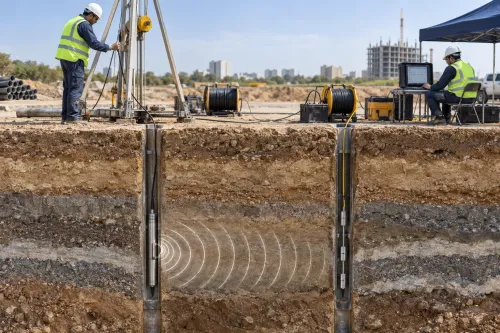
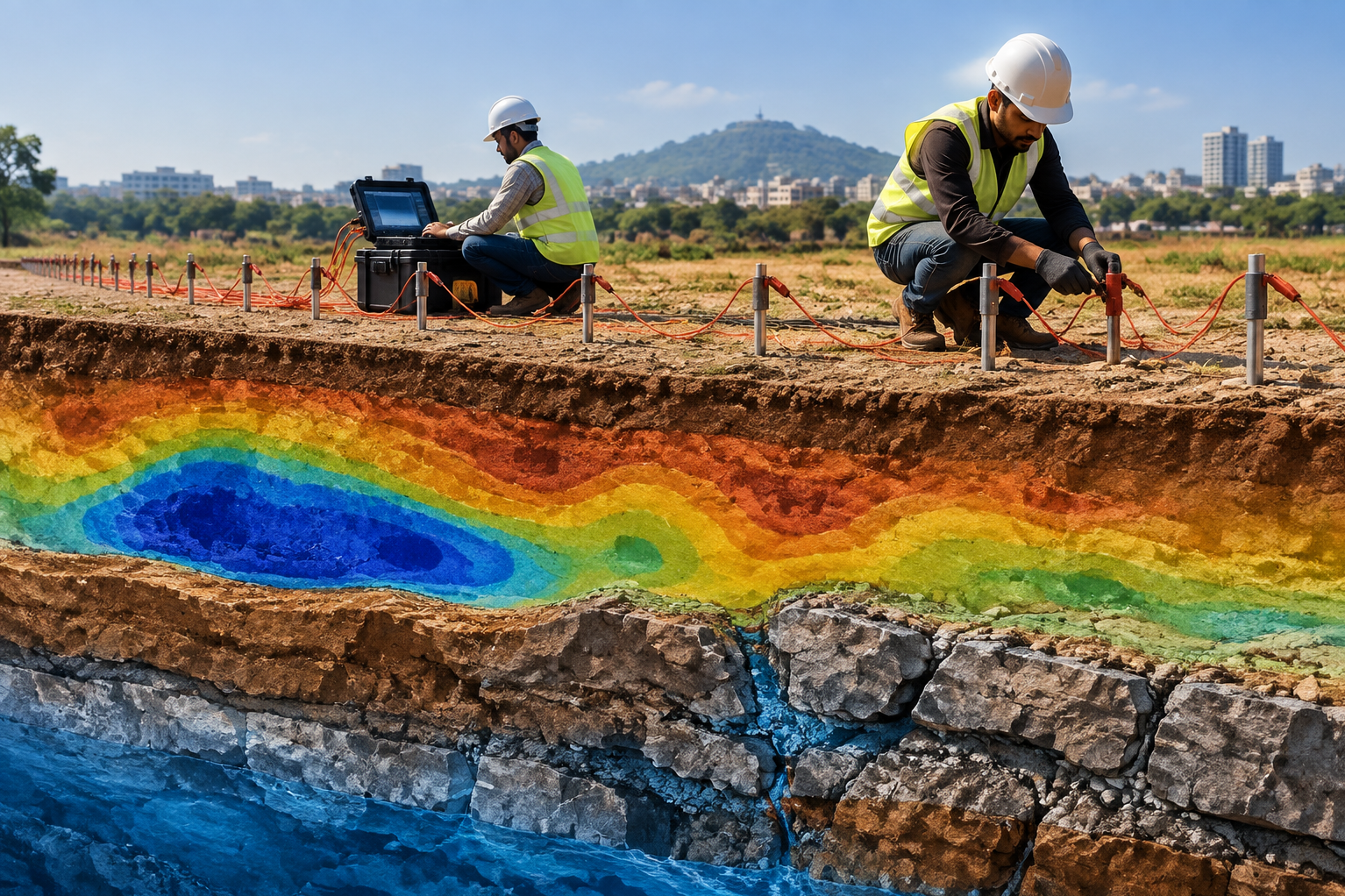
During testing, electrodes are positioned in the ground. Electrical current is introduced through selected electrodes. Potential differences are measured through other electrodes.
These measurements are processed to estimate subsurface resistivity distribution.
What Can Engineers Investigate?
Depending on geological conditions plus survey design, resistivity testing may assist with:
- Geological layer mapping
- Weathered-zone assessment
- Rock profile investigation
- Groundwater exploration
- Fracture-zone identification
- Subsurface anomaly investigation
- Preliminary site characterization
The interpretation should always reflect local geology.
A resistivity value alone does not uniquely identify a material.
Survey Configuration Matters
Electrode spacing influences investigation depth plus resolution.
Closely spaced measurements can provide greater detail near the surface. Wider spacing can investigate deeper conditions, though resolution characteristics change.
The selected configuration depends on the survey objective.
This is why resistivity testing should begin with a defined engineering question rather than simply collecting large quantities of measurements.
Two-Dimensional Imaging
Modern resistivity surveys can collect multiple measurements along a profile.
Processing software can then produce a two-dimensional representation of resistivity variation beneath the survey line.
Such images can help specialists visualize changes in subsurface conditions.
However, graphical output still requires geological interpretation.
Correlation Improves Confidence
Resistivity testing is an indirect investigation method.
Similar resistivity values can sometimes occur in different materials.
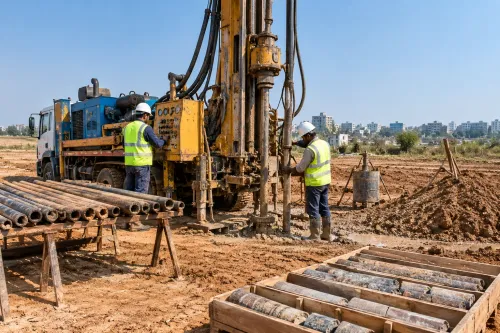
Borehole information, geological mapping, trial pits, groundwater observations, rock core data can help constrain interpretation.
Where direct investigation is available, geophysical results should be correlated wherever practical.
Site Conditions Can Affect Measurements
Urban plus industrial environments may present challenges.
Buried metallic utilities, electrical installations, surface structures, limited electrode contact can influence survey planning.
Before fieldwork begins, the investigation team should review site access, available profile length, utility information, expected geology, required depth.
Nagpur project sites can range from open development land to congested industrial areas. Survey design needs to reflect those conditions.
Selecting a Resistivity Testing Provider
Clients should look beyond instrument availability.
A technically capable provider should understand survey design, field acquisition, quality checks, data processing, geological interpretation.
Becquerel Industries Pvt Ltd supports geotechnical plus geophysical investigation requirements for civil engineering, infrastructure, industrial projects.
Project stakeholders should clearly communicate the investigation objective before testing. Searching for groundwater requires a different interpretation focus from assessing rock depth, geological anomalies, weathered formations.
Electrical resistivity testing delivers the greatest value when integrated into a broader investigation strategy. Used appropriately, it can help engineers investigate a wider area efficiently, identify zones requiring direct verification, improve the overall understanding of subsurface conditions before construction decisions become difficult to change.
Keywords