Before foundation work progresses, project teams may need direct evidence concerning how prepared ground responds under controlled loading. A Static Plate Load Test provides field measurements of load-settlement behaviour at a defined test location.
For industrial buildings, warehouses, infrastructure facilities, equipment foundations, commercial developments across Nagpur, Maharashtra, the test can support foundation-level assessment when performed according to suitable technical requirements.
When Is Static Plate Load Testing Appropriate?
The test may be considered where engineers need field information concerning bearing response at a particular level.
Applications can include:
- Proposed shallow foundation zones
- Improved ground
- Engineered fill
- Industrial floor areas
- Equipment foundation locations
- Pavement subgrades
- Infrastructure development areas
Suitability depends on project conditions plus the engineering objective.
What Happens During the Test?
The test location is prepared to the required level.
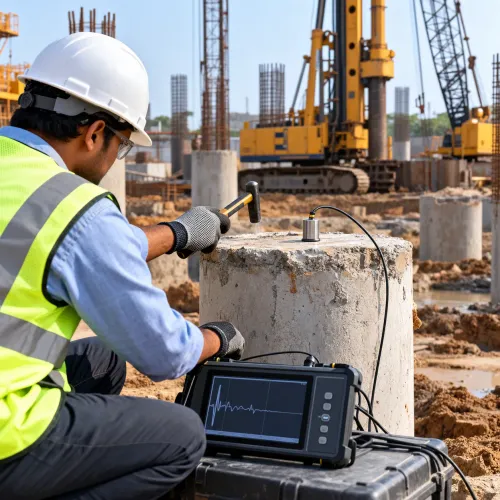
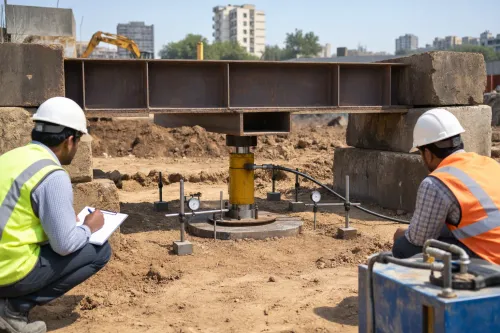
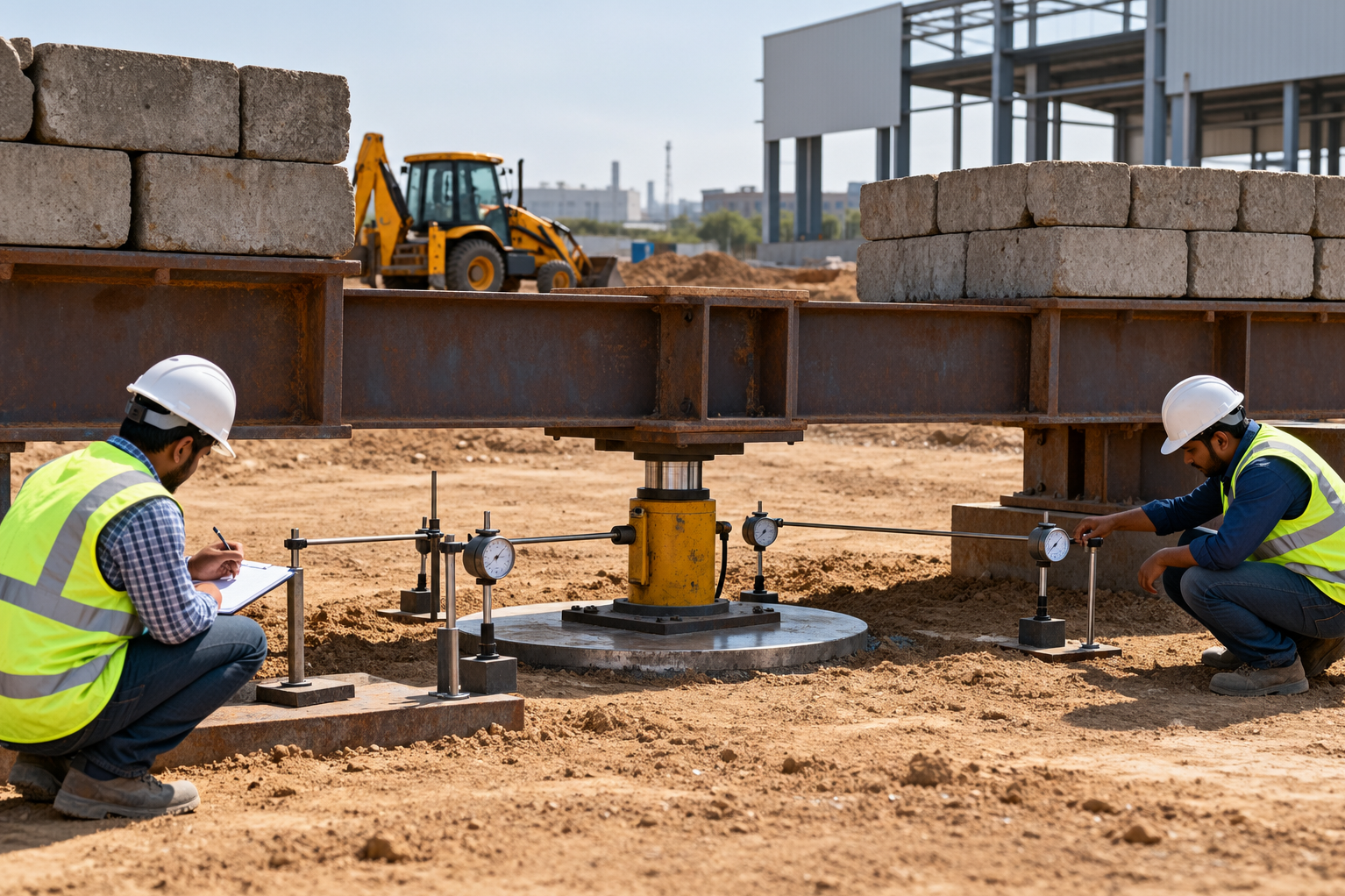
A rigid plate is placed on the prepared surface. Load is applied incrementally through a controlled loading system.
Settlement is measured using suitable gauges referenced to stable points.
Each load stage may be maintained according to specified criteria.
Readings are recorded throughout the test.
The resulting load-settlement data can then be reviewed by the project’s technical team.
Readiness Starts Before Equipment Arrives
One of the most common causes of field delay is incomplete site preparation.
Before booking testing, contractors should verify:
- Test location approval
- Excavation to specified level
- Stable access for equipment
- Prepared test surface
- Required reaction arrangement
- Sufficient working area
- Approved test load
- Loading sequence
- Measurement requirements
- Site safety provisions
These details should ideally be resolved before mobilization.
Why Test Surface Preparation Matters
The plate needs suitable contact with the material being assessed.
Loose debris, disturbed soil, uneven surfaces can affect the test response.
Preparation should follow project requirements without artificially changing the material intended for evaluation.
Testing the wrong level can also reduce the usefulness of results.
For this reason, test elevation should be verified before fieldwork begins.
Static Loading Requires Reliable Measurement
The usefulness of a plate load test depends on accurate load application plus settlement measurement.
Instrumentation should have suitable capacity, resolution, calibration.
Reference beams need stable support beyond the influence zone of the loading arrangement.
Movement of the reference system can distort settlement readings.
Professional testing teams pay close attention to these practical details because small measurement errors can affect interpretation.
Choosing a Provider in Nagpur
Construction teams searching for static plate load testing should evaluate technical readiness rather than availability alone.
Ask whether the provider can support the specified load, required plate size, project procedure, instrumentation needs, reporting requirements.
Field experience is particularly important where sites have restricted access, heavy reaction requirements, unusual foundation levels.
Becquerel Industries Pvt Ltd provides geotechnical field testing support for infrastructure, construction, industrial projects in Nagpur plus other Maharashtra project locations.
Early sharing of drawings, test specifications, proposed test levels, loading requirements can help the provider plan suitable equipment plus manpower.
Treat the Test as an Engineering Decision Point
A static plate load test is valuable because it measures actual field response at the selected location.
It should not be viewed as paperwork completed immediately before foundation construction.
Project teams should understand what information they expect from the test, how results will be reviewed, what action may follow if measured behaviour differs from expectations.
Good coordination between the geotechnical consultant, structural consultant, contractor, testing team makes the process more useful.
When properly planned, static plate load testing can provide practical field evidence concerning ground behaviour before important construction decisions progress. For projects where foundation performance carries significant technical plus financial consequences, that evidence can become a valuable part of construction readiness assessment.
Keywords