Foundation performance depends on how the supporting ground responds when structural load is applied. Plate Load Test Services provide a field method for examining load-settlement behaviour at a selected test location.
The test is frequently considered during foundation assessment, pavement-related work, industrial development, civil infrastructure projects where engineers require direct information about ground response.
Across Nagpur, Maharashtra, plate load testing can support project-specific evaluation when test depth, plate size, loading procedure, site conditions are properly considered.
How Plate Load Testing Works
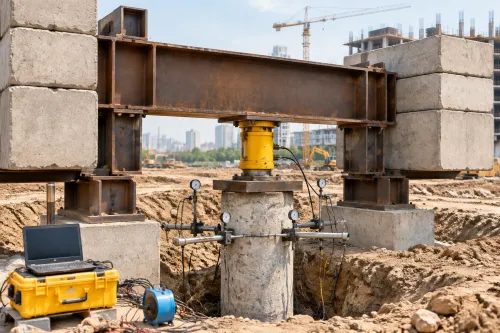
A rigid plate is positioned at the required test level.
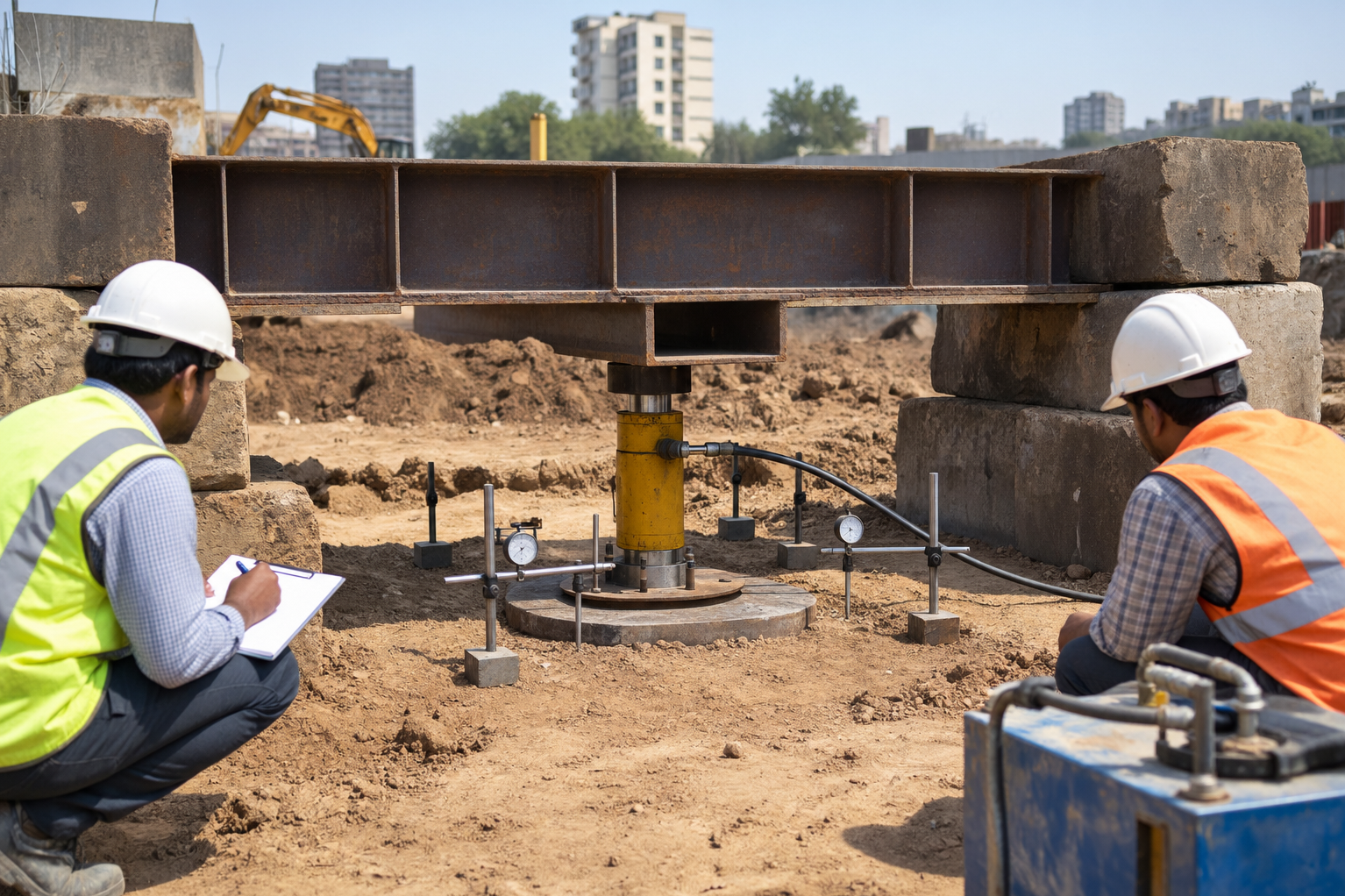
Controlled load is applied to the plate through a suitable loading arrangement. Settlement is measured at each loading stage.
The resulting readings show how the ground beneath the plate responds as pressure increases.
Engineers can use the load-settlement relationship as one source of information during foundation assessment.
What Information Can It Provide?
Depending on test objectives plus applicable methodology, plate testing can support evaluation of:
- Bearing behaviour
- Load-settlement response
- Ground stiffness
- Foundation-level performance
- Subgrade characteristics
- Ground improvement effectiveness
Results must be interpreted within the limitations of the test.
The plate represents a relatively small loaded area compared with many actual foundations. Soil conditions below the test influence measured behaviour.
Test Depth Is Important
Testing at natural ground level may not represent conditions at the proposed foundation level.
If a building foundation will be constructed below existing ground, engineers may specify testing at the relevant depth.
The test surface should be properly prepared. Loose disturbed material can influence readings.
Correct preparation helps the plate make suitable contact with the tested ground.
Reaction Systems Need Proper Planning
Applying load requires a stable reaction source.
The arrangement may involve heavy equipment, structural reaction systems, other suitable methods based on site conditions.
The reaction setup must provide sufficient capacity without interfering with settlement measurements.
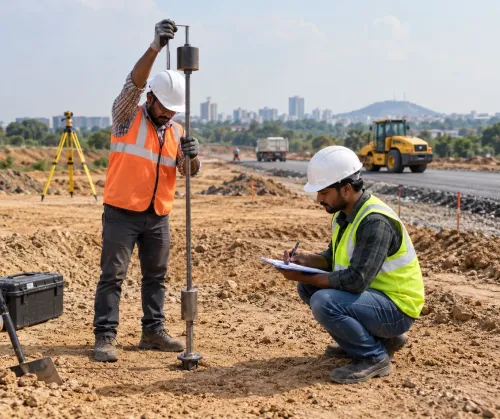
Independent reference points are also important because settlement readings need a stable datum.
Plate Testing After Ground Improvement
Ground improvement is used on some construction sites to enhance near-surface performance.
After improvement, project teams may require field verification.
Plate load testing can provide useful comparative information when performed according to the engineering specification.
This application is relevant for industrial floors, equipment foundations, yards, infrastructure facilities, selected building projects.
Questions to Ask Before Scheduling the Test
Before mobilizing a testing team, project stakeholders should confirm:
- Proposed test locations
- Required test level
- Plate dimensions
- Maximum test load
- Loading increments
- Holding periods
- Reporting requirements
- Site access
- Reaction arrangement
- Applicable project specification
Clarifying these items early can reduce delays during field execution.
Why Local Site Conditions Matter
Nagpur construction sites can differ in soil profile, weathered rock depth, fill conditions, groundwater characteristics.
A result obtained from one location should not automatically be treated as representative of a large project area.
The number plus distribution of test points should reflect engineering requirements.
Becquerel Industries Pvt Ltd provides field testing support for construction, industrial, infrastructure projects requiring systematic ground performance assessment.
Reliable plate load testing depends on much more than placing a plate on the ground. Test preparation, loading control, settlement measurement, stable reference systems, technical documentation all contribute to result quality.
For developers, contractors, consultants, EPC teams, the most useful test is one designed around a clearly defined engineering question. When the objective is understood from the beginning, plate load testing can provide valuable field evidence for foundation-related decisions.
Keywords