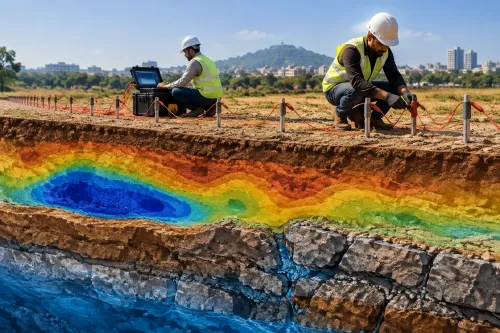
Once a pile disappears below ground, visual inspection becomes extremely limited. Engineers cannot simply look along the buried shaft to identify possible changes in continuity. Pile Integrity Testing provides a non-destructive method for evaluating certain characteristics of installed piles through stress-wave response.
For buildings, bridges, industrial facilities, infrastructure projects in Nagpur, Maharashtra, integrity testing can support pile foundation quality assessment without requiring excavation of the complete pile.
What Is Pile Integrity Testing?
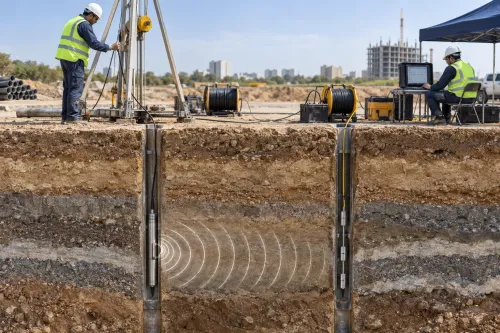
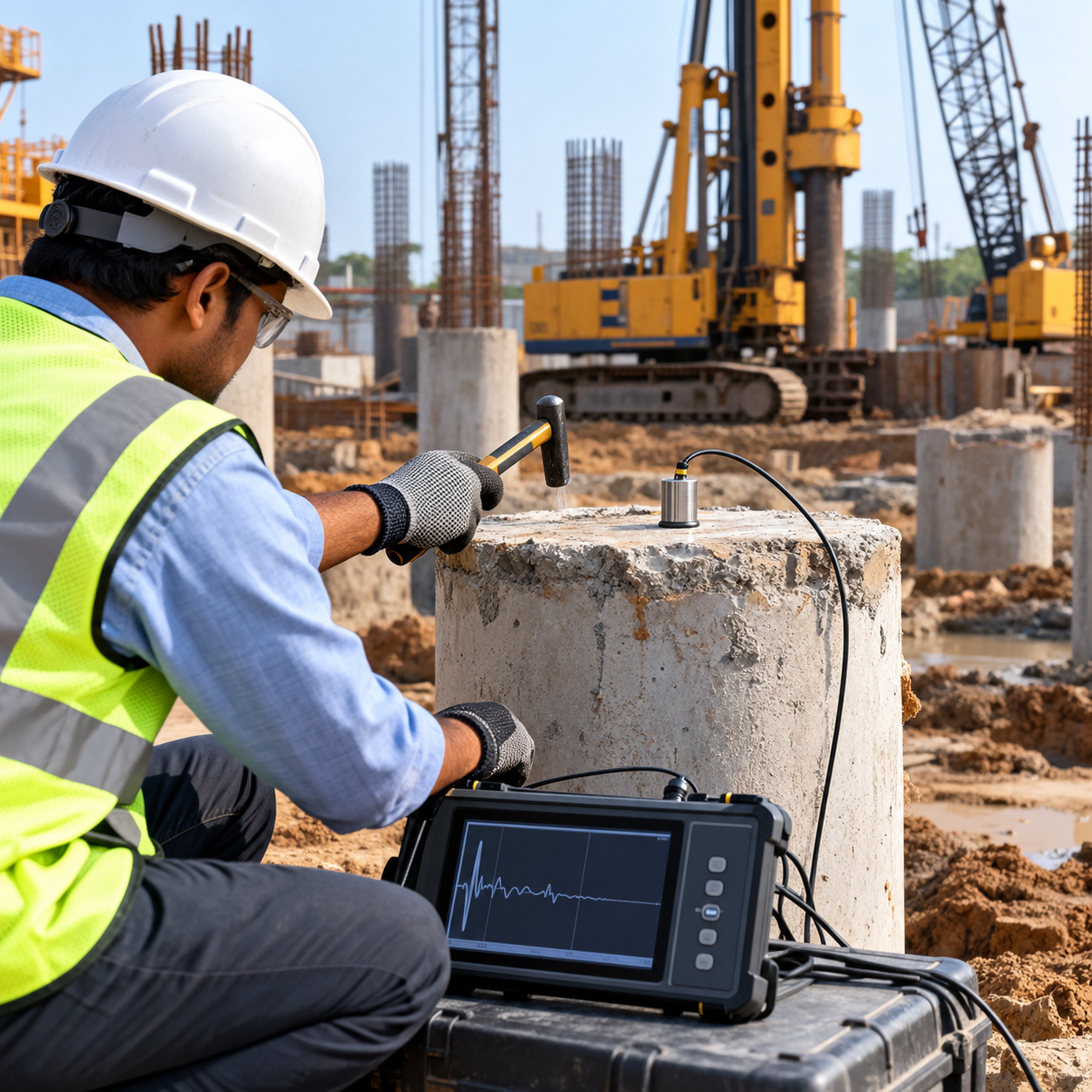
Low-strain integrity testing generally involves applying a small impact to the accessible pile head.
A sensor records the resulting response.
The stress wave travels through the pile. Reflections can occur where there are changes in impedance, cross-sectional characteristics, material properties, pile termination.
Specialized equipment records this response for technical interpretation.
What Can the Test Help Identify?
Subject to method limitations plus site conditions, testing may provide indications related to:
- Pile continuity
- Significant changes in cross-section
- Approximate pile length in suitable conditions
- Major anomalies
- Changes requiring further assessment
The method should not be presented as a complete structural examination of every centimetre of a pile.
Results need interpretation by experienced personnel.
Pile Head Preparation Matters
Good signal quality begins at the pile head.
Loose concrete, debris, contaminated surfaces can interfere with impact transmission plus sensor coupling.
The test surface should therefore be properly prepared.
Access to the pile head should also be available before equipment mobilization.
Poor preparation may result in unclear signals, repeated testing, unnecessary project delays.
When Should Testing Be Scheduled?
Integrity testing is generally coordinated after pile installation once suitable conditions exist for testing.
Project specifications may define timing plus required testing quantity.
For large piling programs, scheduling tests progressively can help project teams review results without waiting until every pile is completed.
This approach may support earlier identification of locations requiring additional technical attention.
Understanding Test Limitations
A non-destructive method is valuable partly because it can assess a pile without destructive exposure.
However, every method has limitations.
Interpretation may become difficult for very long piles, complex pile geometries, piles with significant changes in section, certain soil conditions.
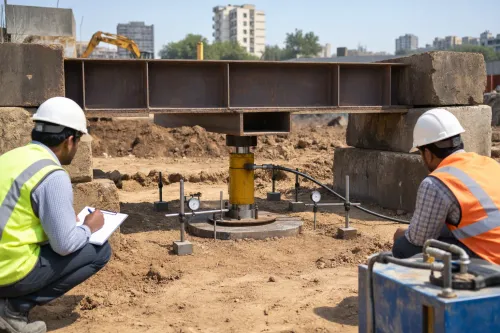
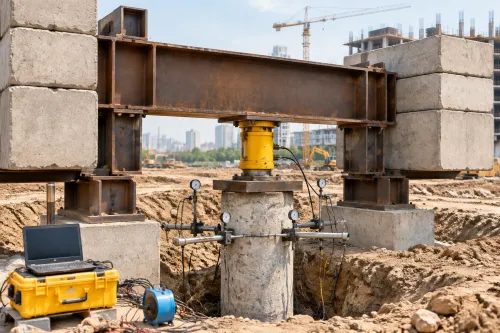
Integrity testing also does not replace pile load testing when direct load-settlement performance needs to be demonstrated.
Each method answers a different engineering question.
What Clients Should Expect From a Testing Provider
A professional service should include more than equipment mobilization.
Clients should look for:
- Suitable testing instruments
- Trained field personnel
- Proper pile head preparation guidance
- Consistent impact technique
- Repeatable signal acquisition
- Technical interpretation
- Traceable pile identification
- Clear reporting
Becquerel Industries Pvt Ltd provides pile-related testing support for construction plus infrastructure projects requiring documented quality assessment.
Why Testing Is Valuable for Nagpur Projects
Foundation defects can become difficult to investigate once pile caps plus superstructure construction progress.
Testing at the appropriate construction stage provides project teams with an opportunity to review pile response while access remains practical.
For real estate developers, EPC contractors, civil contractors, structural consultants, government infrastructure agencies in Nagpur, this can strengthen foundation quality-control documentation.
Pile integrity testing is most useful when project teams understand exactly what the method can reveal. It should form part of a broader quality assurance process that includes pile installation records, concrete quality information, geotechnical data, design requirements, additional testing where necessary.
Keywords