Cement-plant equipment combines dusty surfaces, restricted access, shutdown pressure and steel components with very different failure risks. You will be able to define which parts need magnetic particle testing, prepare them correctly, choose a suitable technique and compare inspection reports against the right acceptance standard.
Key takeaways
- Use MPT only on accessible ferromagnetic steel or iron parts.
- Clean the surface and remove coatings that could hide indications.
- Apply magnetisation in two directions to improve crack detection.
- Compare providers by procedures, personnel qualifications, reports, and equipment.
Which cement-plant components and materials are suitable for MPT?
MPT is suitable for accessible cement-plant parts made from ferromagnetic steel or iron, where the decision concerns surface-breaking or near-surface cracks. Magnetic particle testing services in Nagpur cannot examine aluminium, copper, austenitic stainless steel, or nonmagnetic weld overlays by conventional MPT.
| Component | Suitable examination target | Scope must name |
|---|---|---|
| Kiln girth gears and mill components | Gear teeth, rims, hubs, keyways and repair welds | Component number, steel grade, tooth or weld location, and accessible surfaces |
| Crusher shafts and couplings | Shafts, fillets, keyways, shoulders and attachment welds | Shaft diameter, material, loaded zones and examination length |
| Hoppers, chutes and welded structural members | Carbon-steel weld toes, edges, brackets and attachment plates | Weld identification, member location, surface condition and access limits |
| Lifting attachments | Lugs, pad eyes, hooks and their welds | Designation, load-bearing welds, hole edges and inspected faces |
| Pressure-containing ferromagnetic parts | Accessible welds, nozzles, seams and repair areas | Equipment number, pressure boundary, weld map and governing code |
A scope saying “all equipment” is inadequate. Name the material grade or record it as assumed, identify the actual critical surfaces, and state whether the examination covers weld toes, roots accessible from one side, machined transitions, or repaired areas.
MPT does not replace radiography or ultrasonics for deep lack of fusion, internal porosity or inclusions. Cement plant inspection services should also document the component identity, magnetisation direction, dry or fluorescent wet method, equipment check, indications, disposition and examiner qualification.
What must happen before and during the examination?
A credible examination starts only after the component is safe, reachable and clean enough for particles to move across its surface. A quotation for mpt inspection in nagpur should therefore define the actual welds or surfaces covered, not simply state “all equipment.”
1. Isolate the equipment, apply lockout and tagout, and verify zero energy. Cool hot steel, control cement dust, protect nearby electrical equipment, and complete confined-space or work-at-height controls before NDT personnel enter.
2. Remove guards, insulation or refractory only under an approved work method. Clean off cement dust, scale, oil, rust, weld spatter and loose paint; rough grinding can create misleading marks. State whether any coating remains and the procedure’s permitted thickness.
3. Establish safe access and adequate lighting. MPT cannot cover a buried interface, hidden weld toe or surface that the yoke and particles cannot reach.
4. Check the material identification and equipment condition, then magnetise the selected area with the planned field direction. Record the technique and coverage.
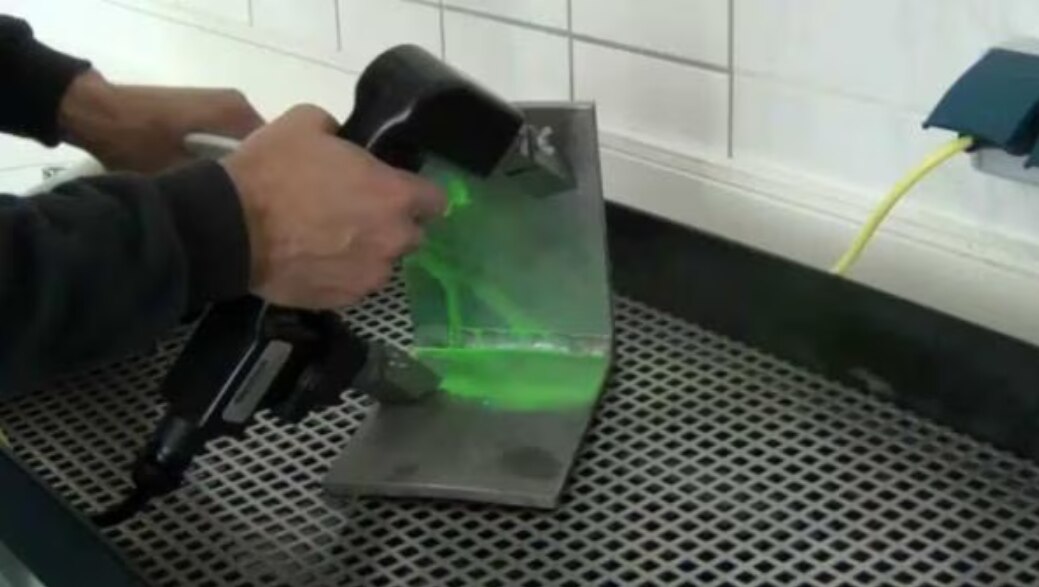
5. Apply visible dry powder under controlled white light, or wet fluorescent particles where higher sensitivity and ultraviolet inspection are required. Keep the surface wet and the viewing conditions controlled for fluorescent work.
6. Examine the surface while the field is applied, mark each indication, and distinguish crack-like, sharp linear marks from rounded or geometric background indications. Clean and recheck suspicious areas when needed.
7. Remove the magnetic field after examination, demagnetise if required, and clean away particles and contrast paint. Cement plant inspection services should document inaccessible areas instead of claiming unverified coverage.
How do you choose magnetisation direction and particle method?
Choose the magnetisation technique according to access, component shape and the flaw direction you need to expose. A yoke suits local examination of accessible carbon-steel weld toes, fillets and repair areas. Prods suit larger surfaces where placing two electrical contacts is practical, but contact marks, arcing and local heating require control.
A coil creates a longitudinal field through a shaft, bar or weld area; use it when circumferential cracks are the concern. A central conductor passes current through a hollow part, producing a circular field that reveals longitudinal flaws on the bore or outer surface. State the coverage and contact arrangement in the procedure.
| Technique | Best use | Main limitation |
|---|---|---|
| Yoke | Local welds and small areas | Limited field coverage; requires accessible surface |
| Prods | Broad plates and structural members | Contact marks, arcing risk and spacing effects |
| Coil | Shafts, bars and circumferential flaws | Part geometry must fit the coil field |
| Central conductor | Hollow shafts, rings and bores | Requires access through the opening |
Use two substantially different field directions, often approximately perpendicular, because a crack parallel to the applied field can produce weak leakage and remain unseen. One pass along a weld is not complete coverage.
Visible dry powder needs a contrasting background and works well for accessible field work. Fluorescent wet particles can reveal finer indications under ultraviolet-A in a darkened area, but require controlled UV-A intensity, visible light, bath concentration and particle condition. Specify these choices in any MPT inspection in Nagpur or ferromagnetic weld testing in Nagpur quotation.
How are MPT indications judged on cement-plant welds and parts?
Reject or accept an MPT indication only after confirming that it is relevant, measuring it, and applying the governing fabrication, repair or inspection code plus the purchaser’s specification. ASTM E709 is a guide to magnetic particle examination; ASTM E1444/E1444M sets examination practice. Neither creates universal rejection limits for every cement-plant component.
A relevant indication usually forms a sharp, continuous line or a concentrated pattern that follows a crack, lack of fusion at a weld toe, or another discontinuity. Non-relevant indications often follow surface geometry or residual magnetism:
- Arc strikes, abrupt section changes and weld toes
- Keyways, threads and machining marks
- Magnetic writing or particle accumulation at field-entry points
Clean and re-test the area, compare it with the weld profile, and change magnetisation direction where needed. An indication that disappears after cleaning or changes with field direction may be geometric or magnetic artefact; a persistent linear indication demands disposition under the specified acceptance criterion.
ISO 9934-1 states general principles for magnetic particle testing, while ISO 23278 provides acceptance levels for relevant indications in welds. Confirm which ISO level, fabrication code or repair specification governs before calling a result acceptable. A report for cement plant inspection services must identify the component and critical surface, not merely say “all equipment.”
MPT detects surface-breaking and near-surface flaws, not reliable deep internal lack of fusion, porosity or inclusions. Supplement it with radiography for volumetric weld examination or ultrasonics for internal planar flaws when depth controls the decision. This is essential in ferromagnetic weld testing in Nagpur as elsewhere.
How should you compare a magnetic particle inspection company in Nagpur?
A quotation from a magnetic particle inspection company in Nagpur is useful only when it names the part, material and examination scope. Ask for a price for accessible carbon-steel weld toes, or for fluorescent wet MPT of a dismantled shaft—not a vague “ferromagnetic weld testing” line.
| Item to verify | What the quotation must state | What the report must show |
|---|---|---|
| Component identity | Tag, drawing number, weld location and access limits | Examined areas and exclusions |
| Material | Grade, or the assumed ferromagnetic material | Material basis and coating condition |
| Preparation | Cleaning, coating removal and surface finish | Surface condition before testing |
| Technique | Yoke, prods, coil or central conductor | Equipment identification and method |
| Field direction | Two substantially different directions where required | Direction, overlap and coverage map |
| Particles | Visible dry powder or fluorescent wet medium | Medium, batch or identification details |
| Equipment checks | Calibration or performance-check method and result | Check date, equipment ID and result |
| Lighting | Visible-light conditions or UV-A arrangement | Lighting verification and examination conditions |
| Examiner | Qualification, certification scheme and authorization | Examiner name, signature and date |
| After testing | Demagnetisation requirement and cleaning | Residual-field check, if required, and final condition |
A single yoke pass along a weld is not proof of complete coverage; a flaw parallel to the field can escape detection. Magnetic particle testing services in Nagpur should also state whether shutdown isolation, scaffolding or dismantling is excluded.
Becquerel Industries Pvt Ltd fits the plan when its quotation ties on-site access, technique and reporting to the cement plant’s component list and inspection procedure.
Related product
 | Our experts utilize Magnetic Particle Testing to detect surface and near surface flaws and defects. View product → |
Frequently asked questions
Which cement-plant components and materials are suitable for MPT?
MPT suits accessible components made from ferromagnetic steel or iron, including welds and parts where surface-breaking or near-surface cracks are suspected. It does not suit aluminium, copper, austenitic stainless steel, or nonmagnetic weld overlays.
What must happen before and during magnetic particle testing?
Clean and prepare the examination area, confirm the material is ferromagnetic, select suitable magnetisation equipment, apply the magnetic field and particles, inspect indications under adequate lighting, and document the results.
How do you choose magnetisation direction and particle method?
Set the magnetic field across the suspected crack direction because cracks parallel to the field can be missed. Use a suitable dry-powder or wet-particle method based on surface condition, access, sensitivity, and site conditions.
How are MPT indications judged on cement-plant welds and parts?
Assess each indication by its location, shape, length, continuity, and whether it is relevant to service-related cracking. Compare the result with the acceptance criteria specified in the applicable fabrication, repair, or inspection code.
How should you compare a magnetic particle inspection company in Nagpur?
Check its written MPT procedure, qualified personnel, calibrated equipment, lighting controls, safety practices, material coverage, reporting format, and experience with cement-plant welds and components.
Keywords