
A bridge may appear structurally sound during a visual inspection, yet its actual behaviour under traffic loading can reveal a different picture. A bridge load test provides measurable evidence of how the structure responds when subjected to controlled loads. It is commonly used for newly constructed bridges, older bridges, rehabilitated structures and bridges where increased traffic loads are expected.
For infrastructure authorities, contractors and engineering consultants in Nagpur and across Maharashtra, load testing supports informed decisions about bridge safety, serviceability and continued use.
What Is a Bridge Load Test?
A bridge load test is a field evaluation in which predetermined loads are applied to a bridge while engineers record its response. Loaded vehicles, calibrated weights or other controlled loading arrangements may be used depending on the bridge type and approved test methodology.
The observed structural response is compared with calculated or permissible values. This helps determine whether the bridge behaves in accordance with its design assumptions.
Bridge load testing may examine:
- Vertical deflection under load
- Recovery after load removal
- Strain at selected structural locations
- Load distribution between girders
- Rotation or displacement at bearings
- Crack behaviour in concrete components
- Dynamic response caused by moving vehicles
Testing does not rely on a single reading. Engineers consider the loading sequence, instrument locations, environmental conditions and consistency of measurements before interpreting the results.
Static and Dynamic Bridge Load Tests
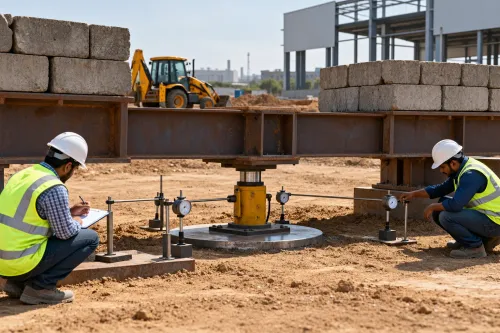
A static load test involves placing controlled loads at predetermined positions on the bridge. Measurements are recorded before loading, during different loading stages and after the loads have been removed. This method is useful for evaluating deflection, strain and structural recovery.
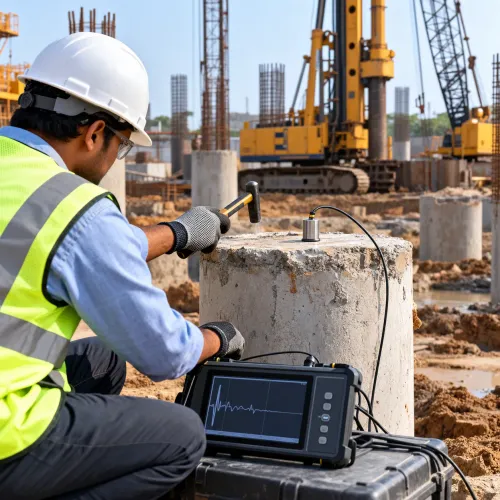
A dynamic load test assesses the bridge’s response to moving vehicles or induced vibration. It may be used to study impact effects, vibration characteristics and the structure’s behaviour under traffic-like conditions.
The appropriate method depends on the objective of the investigation. Static testing is often selected for direct performance verification, while dynamic testing provides additional insight into vibration and movement under operating conditions.
When Is Bridge Load Testing Required?
A field bridge load test may be recommended in several situations:
- Before opening a newly constructed bridge to traffic
- After major repair, strengthening or rehabilitation work
- When drawings or previous structural records are incomplete
- Following visible distress, unusual deflection or cracking
- Before permitting heavier vehicle movement
- As part of a detailed structural condition assessment
- After an impact, flood, fire or other damaging event
The test objective should be defined before instruments and loading arrangements are selected. A commissioning test for a new bridge differs from an investigative test performed on an ageing structure.
How the Test Is Planned
A proper bridge load test begins with a review of drawings, material information, previous inspection reports and site conditions. Engineers identify critical sections and determine suitable load positions.
A typical testing programme includes:
- Preliminary structural inspection
- Instrument selection and calibration
- Preparation of a load placement plan
- Baseline measurement before loading
- Incremental application of test loads
- Observation during the holding period
- Measurement after unloading
- Engineering analysis and reporting
Traffic control, site access and communication between the testing team and vehicle operators are equally important. Testing should be stopped if abnormal movement, progressive cracking or another unexpected condition is observed.
What a Bridge Load Test Report Should Explain
A useful report should document the bridge configuration, test loads, instrument locations, recorded measurements and comparison criteria. Photographs and loading diagrams help make the findings easier to review.
Becquerel Industries Pvt Ltd supports field testing requirements in Nagpur through planned data collection and technical reporting. The results of a bridge load test can help asset owners understand whether observed behaviour is acceptable, whether further investigation is required and where maintenance or strengthening priorities should be focused.
Keywords