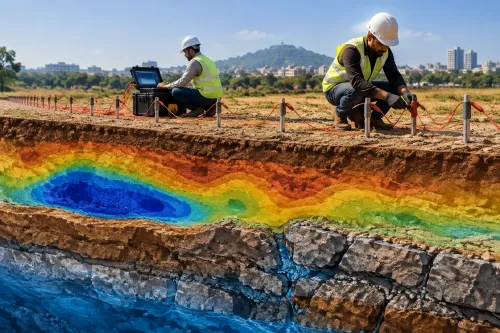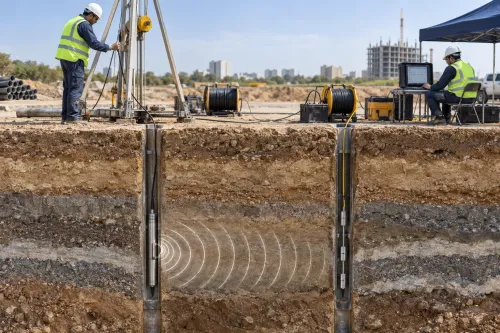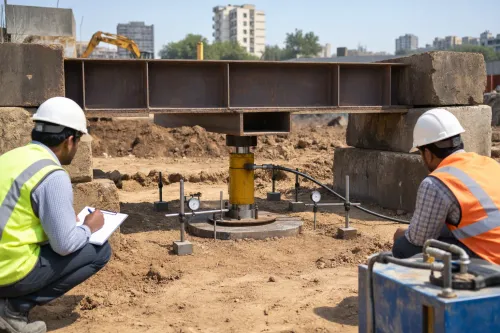
A construction site may appear uniform at ground level while containing several different soil layers below the surface. Fill material, loose soil, dense strata, weathered rock, competent rock may occur at different depths. Soil Boring and Rock Drilling helps engineering teams identify these variations before foundation construction begins.
For projects in Nagpur, Maharashtra, boring plus drilling can form a fundamental part of geotechnical investigation for buildings, industrial facilities, bridges, roads, infrastructure corridors, heavy civil works.
What Is Soil Boring?
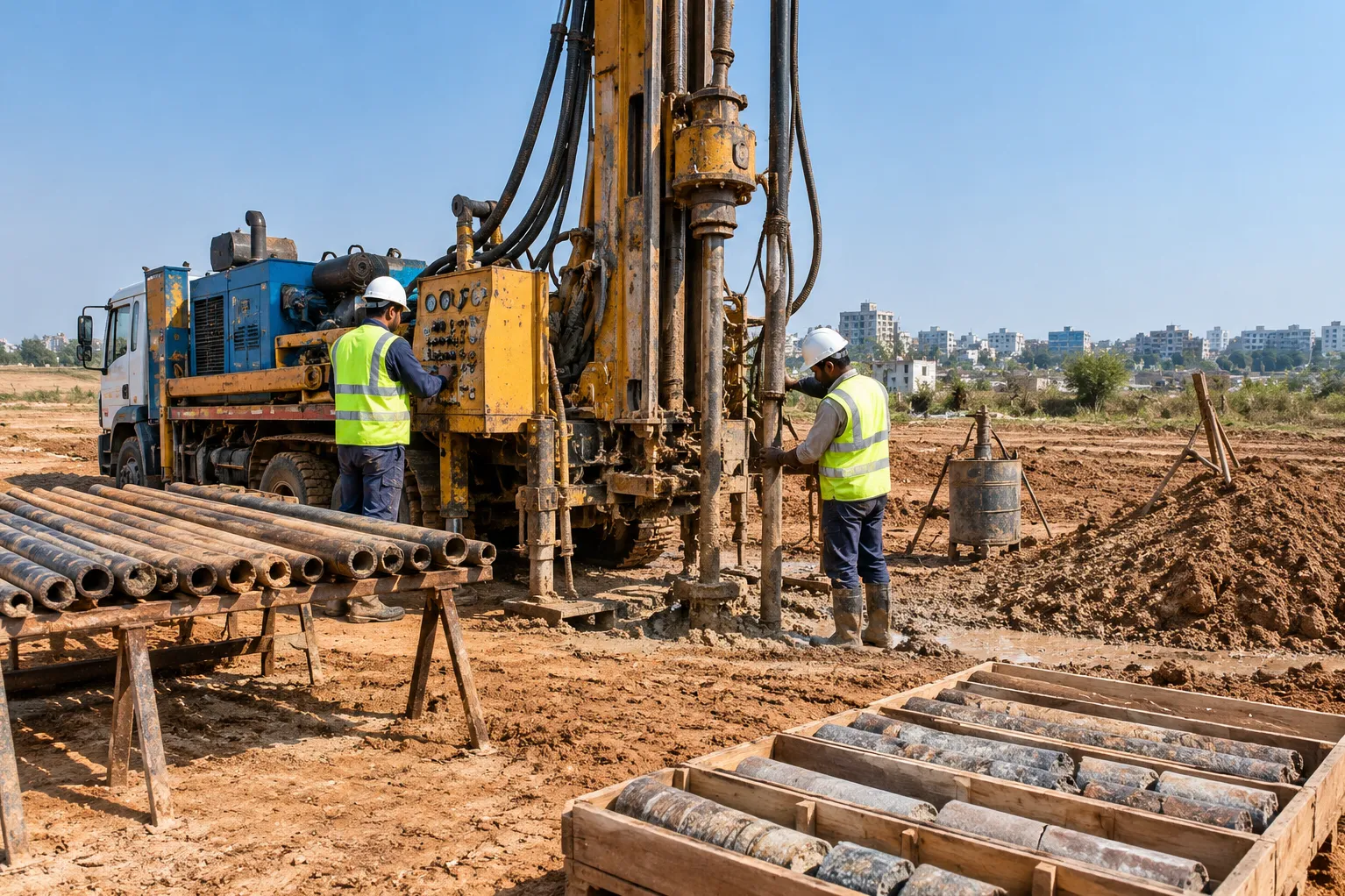
Soil boring creates a controlled borehole through subsurface strata so engineers can observe soil conditions at different depths.
During boring, representative samples may be collected for visual classification plus laboratory examination. Field tests may also be conducted within the borehole according to investigation requirements.
A bore log can document:
- Layer depth
- Soil description
- Sample information
- Field test results
- Groundwater observations
- Changes in strata
- Rock encounter depth
This record helps engineers build a vertical profile of the ground.
When Rock Drilling Becomes Necessary
Soil boring may eventually encounter weathered rock, fractured rock, competent rock.
At this stage, suitable rock drilling techniques can be used to obtain core samples. These cores provide direct evidence concerning the formation beneath the project.
Rock core examination may reveal:
- Core recovery
- Rock quality designation
- Weathering
- Fractures
- Discontinuities
- Strength characteristics
- Changes in lithology
Such information can influence foundation depth, excavation planning, pile design, anchoring requirements, slope-related engineering decisions.
Why Sampling Quality Matters
A borehole has limited value when samples fail to represent actual subsurface conditions.
Sampling procedures must therefore suit the material being investigated. Disturbed samples may be sufficient for selected classification tests. Undisturbed samples may be required when engineers need more representative information concerning strength, compressibility, related engineering characteristics.
Rock core quality also depends on suitable drilling practices.
Poor recovery can make geological interpretation difficult. Proper drilling equipment, trained personnel, systematic documentation improve the usefulness of the investigation.
Borehole Locations Need Technical Planning
Random drilling does not automatically produce useful geotechnical information.
Borehole quantity, position, depth should reflect project geometry plus expected structural loads. Large industrial developments may require multiple investigation points across building footprints, equipment zones, utility areas, roads, storage areas.
Bridge projects may require investigation near proposed foundation locations. Tall buildings may require deeper investigation to assess strata influenced by structural loading.
The investigation layout should therefore match the engineering question being studied.
Groundwater Observations Add Valuable Context
Groundwater can influence excavation, foundation construction, soil behaviour, temporary works.
During boring, groundwater observations may provide preliminary information about subsurface water conditions. Such readings need appropriate interpretation because water levels can change due to season, rainfall, drainage conditions, nearby construction.
Nagpur projects planned around seasonal weather changes may benefit from careful consideration of groundwater-related information during geotechnical assessment.
Boring Data Supports Better Construction Planning
Accurate borehole records can help project teams anticipate difficult excavation, variable rock levels, unsuitable near-surface material, weak strata.
This can support more informed planning concerning:
- Foundation type
- Excavation equipment
- Piling requirements
- Dewatering provisions
- Construction sequence
- Earthwork management
Becquerel Industries Pvt Ltd undertakes subsurface investigation activities for civil, industrial, infrastructure projects requiring technically documented ground information.
The value of soil boring plus rock drilling lies in reducing uncertainty. Ground conditions cannot be assessed reliably from surface appearance alone. Direct investigation gives consultants, developers, contractors a clearer understanding of what their structures will ultimately depend upon: the ground beneath the project.
Keywords